In this article3 sections
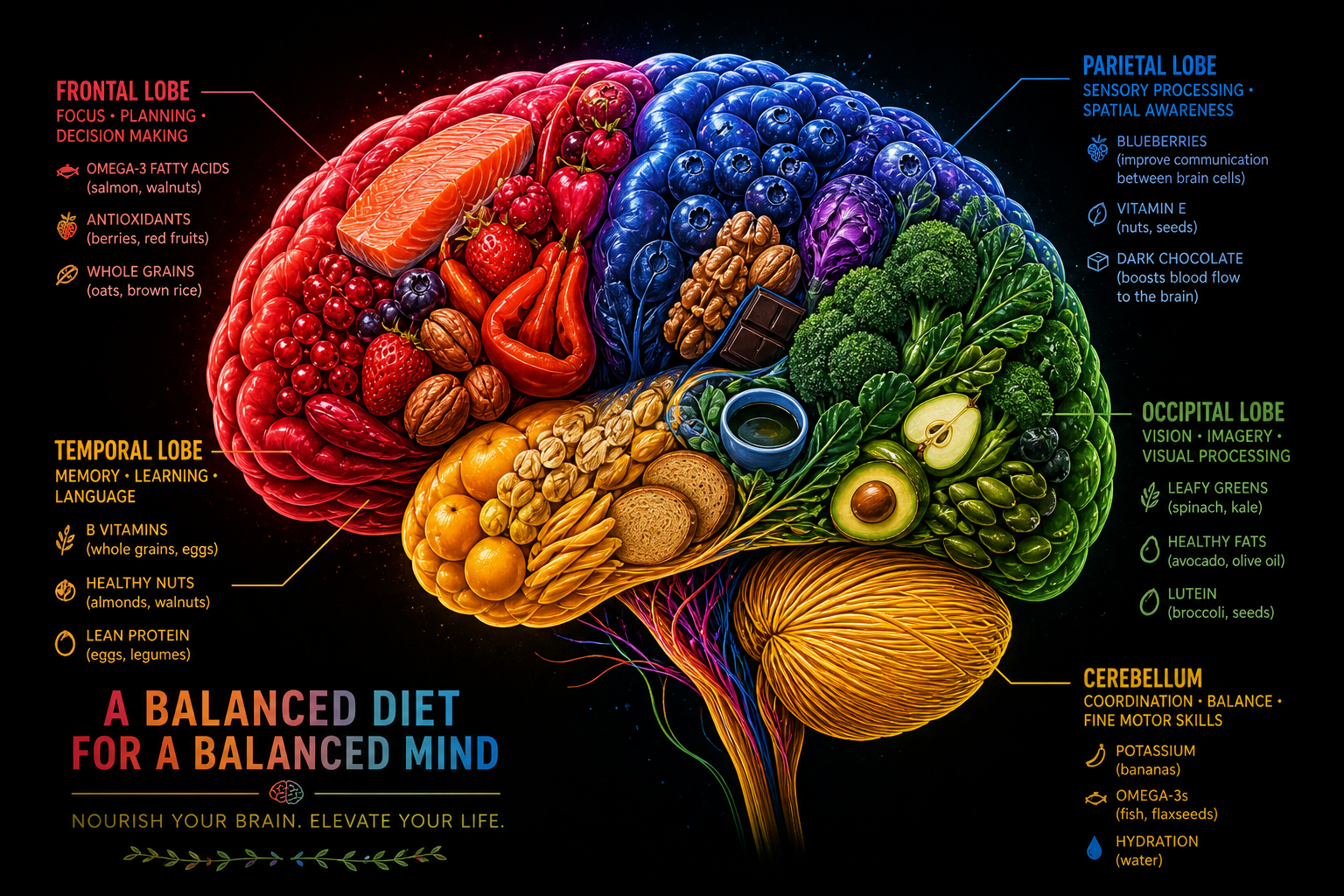
Just as the body needs a balanced diet to grow well, the brain needs a balanced learning experience to develop different ways of thinking. A child may be good at Mathematics but struggle to explain a scientific idea, or know many facts but find an unfamiliar problem difficult.
Four essential ingredients for a thinking mind
- 1
Mathematics — building logical thinking
Mathematics helps children recognise patterns, understand relationships, analyse information and arrive at logical solutions.
- 2
Science — understanding how things work
Science encourages children to observe, question, explore and understand the world around them.
- 3
Aptitude — applying thinking to new situations
Aptitude develops reasoning, judgement and problem-solving when children encounter unfamiliar situations.
- 4
General Knowledge — connecting with the world
General Knowledge expands awareness and helps the brain connect learning with real life.
A balanced diet for the brain
| The ingredient | What it develops | |
|---|---|---|
| Mathematics | Structure | Logical thinking |
| Science | Curiosity | Observation and explanation |
| Aptitude | Application | Reasoning in new situations |
| General Knowledge | Awareness | Connections with the world |
Mathematics
The ingredient
Structure
What it develops
Logical thinking
Science
The ingredient
Curiosity
What it develops
Observation and explanation
Aptitude
The ingredient
Application
What it develops
Reasoning in new situations
General Knowledge
The ingredient
Awareness
What it develops
Connections with the world
Introducing IHOST
International Holistic Olympiad for Smart Thinkers brings Mathematics, Science, Aptitude and General Knowledge together in one holistic learning experience. Rather than treating subjects as isolated areas, IHOST encourages children to think logically, explore with curiosity, apply knowledge, connect ideas and approach unfamiliar problems with confidence.
“One brain. Four dimensions. A more balanced way to learn.”
From subject learning to holistic thinking
The future belongs not only to children who can remember information, but to those who can understand it, connect it, question it and use it. A balanced learning approach gives every child more opportunities to discover how to think—not just what to learn.
Explore IHOST
Think • Explore • Discover • Excel
For schools
See what an Academic Health Report reveals about your cohort.
Register your school to receive dimension-level insights for every learner, benchmarked at school, national and international level.
Register your school