In this article2 sections
Children will need to think, question, solve problems, adapt to change, communicate ideas and make thoughtful decisions. This does not make academic learning less important. It means children need to learn how to use what they know.
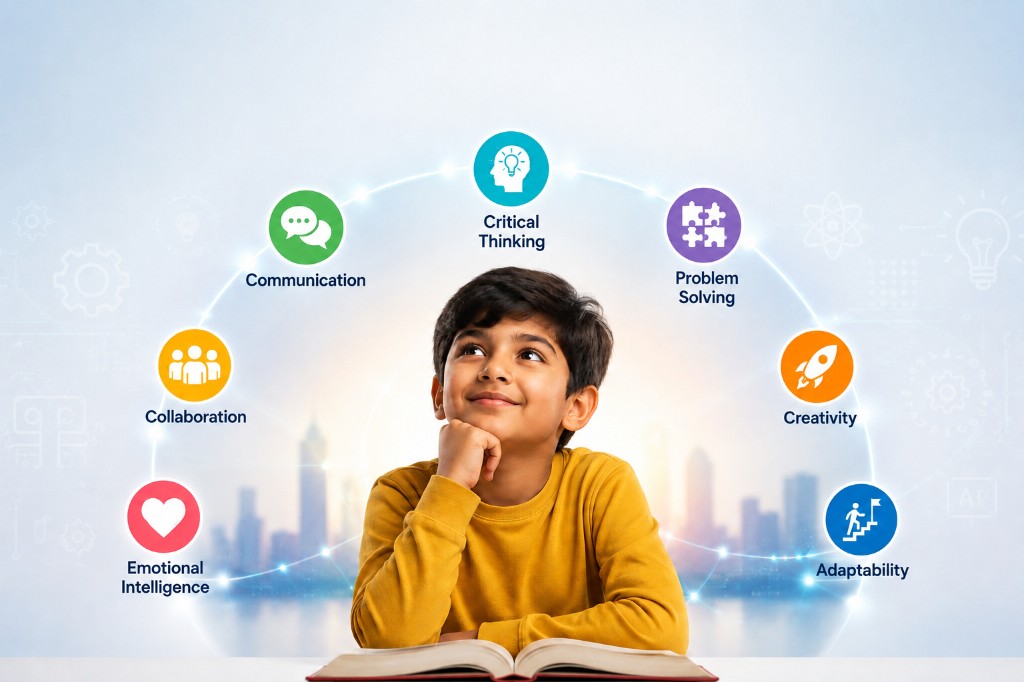
Seven skills children need
- 1
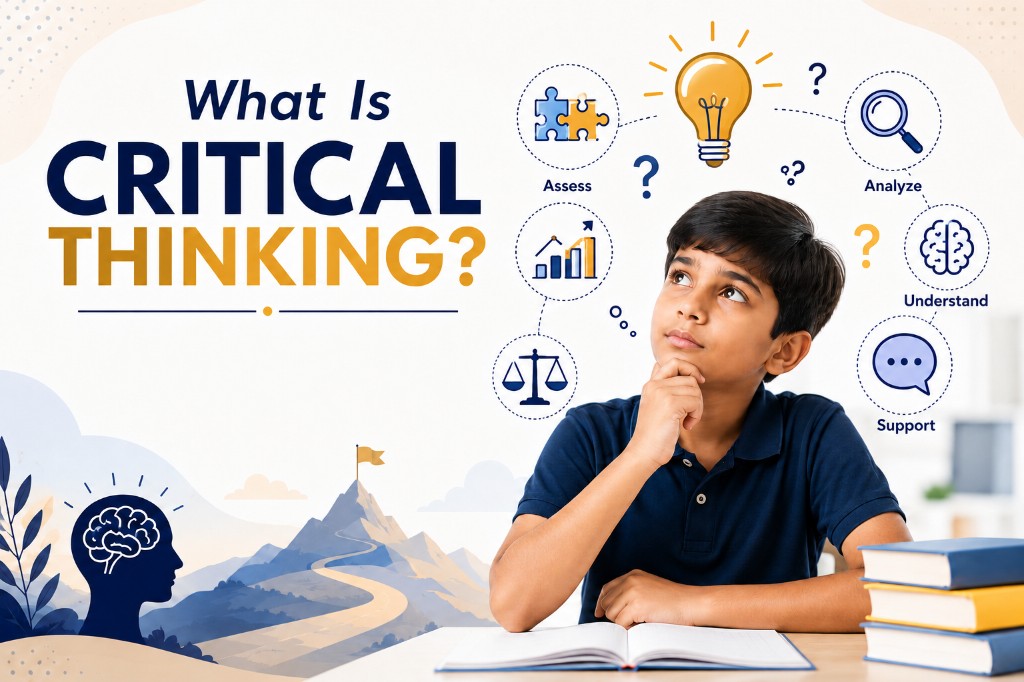
Critical thinking
Look beyond the obvious and question assumptions.
- 2
Problem-solving
Understand a problem, explore possibilities, try a solution and learn from the result.
- 3
Reasoning and decision-making
Compare possibilities, identify patterns and understand consequences.
- 4
Curiosity and questioning
Explore why, how and what if.
- 5
Communication
Explain ideas and reasoning clearly, listen to others and communicate with confidence.
- 6
Adaptability and application
Use existing knowledge in new situations and adapt when circumstances change.
- 7
Digital and future literacy
Navigate technology, information, financial understanding and responsible decision-making thoughtfully.
These skills do not develop in one day
They develop through everyday experiences, meaningful questions, practice, reflection, assessment and timely support. That is why education needs opportunities to observe how children think, learn, apply and grow.
A fuller definition of progress
| Not just | Also | |
|---|---|---|
| Achievement | Marks | Understanding and application |
| Learning | Remembering | Thinking and adapting |
| Success | One result | Continued growth |
Achievement
Not just
Marks
Also
Understanding and application
Learning
Not just
Remembering
Also
Thinking and adapting
Success
Not just
One result
Also
Continued growth
“Marks + Understanding + Skills: that is the foundation of future readiness.”
For schools
See what an Academic Health Report reveals about your cohort.
Register your school to receive dimension-level insights for every learner, benchmarked at school, national and international level.
Register your school